
Unlocking Innovation: The Impact of Generative AI Across Industries and Software Development

Generative AI refers to a subset of artificial intelligence techniques focused on creating new content, such as images, text, music, and even videos, that is indistinguishable from content created by humans. At the heart of generative AI are algorithms known as generative models, which are trained on vast amounts of data to learn the underlying patterns and structures. One of the most popular generative models is the Generative Adversarial Network (GAN), where two neural networks, the generator and the discriminator, compete against each other in a game-like framework. The generator aims to produce realistic content, while the discriminator tries to differentiate between real and generated content. Through this adversarial training process, generative models learn to create increasingly convincing and high-quality outputs.

The significance of generative AI lies in its ability to democratize content creation, automate creative tasks, and push the boundaries of human imagination. By enabling machines to generate original content across various domains, generative AI opens up new possibilities in fields such as art, design, entertainment, and even scientific research. For example, generative models can assist artists in generating novel artwork, help writers with creative writing prompts, and aid researchers in simulating complex systems. Additionally, generative AI has practical applications in areas such as data augmentation for training machine learning models, generating synthetic data for testing, and personalizing user experiences in recommendation systems and virtual assistants.

Moreover, generative AI has sparked ethical and societal discussions around issues such as content authenticity, privacy, and the potential misuse of AI-generated content for malicious purposes, including deepfakes and misinformation. As generative models become increasingly sophisticated, there is a growing need for robust mechanisms to verify the authenticity of content and mitigate potential risks. Despite these challenges, the transformative potential of generative AI in revolutionizing content creation, enhancing human creativity, and advancing AI-driven innovations makes it a compelling area of research and development with wide-ranging implications for society.

Significance of Generative AI in various industry segments

  1. Art and Design: Generative AI tools are revolutionizing the art and design industry by enabling artists and designers to explore new creative frontiers and streamline their workflow. These tools empower creators to generate endless variations of designs, from digital artwork to product prototypes, leveraging algorithms trained on vast datasets of visual and aesthetic principles. By harnessing generative AI, artists can discover novel patterns, shapes, and styles, pushing the boundaries of traditional art forms and fostering innovation in design processes.
  2. Healthcare: In the healthcare sector, generative AI is driving advancements in medical imaging, drug discovery, and personalized medicine. Generative models can generate synthetic medical images to augment limited datasets, improving the accuracy of diagnostic tools such as MRI and CT scans. Moreover, AI-driven generative algorithms are accelerating drug discovery by simulating molecular structures and predicting potential drug candidates, leading to more efficient and cost-effective pharmaceutical research. Additionally, generative AI enables the creation of personalized treatment plans based on individual patient data, optimizing healthcare outcomes and revolutionizing patient care.
  3. Entertainment: Generative AI is reshaping the entertainment industry by enhancing content creation, storytelling, and audience engagement. From generating lifelike characters and environments in video games to creating immersive virtual worlds and interactive narratives in augmented reality experiences, generative AI tools empower content creators to push the boundaries of creativity and deliver engaging entertainment experiences. Furthermore, AI-generated content, such as music compositions, movie scripts, and virtual influencers, is captivating audiences worldwide, transforming the way we consume and interact with entertainment media.
  4. Finance: In the finance sector, generative AI is driving innovation in algorithmic trading, risk management, and fraud detection. Generative models can analyze vast financial datasets to identify complex patterns and trends, enabling more accurate predictions of market behavior and investment opportunities. Moreover, AI-generated scenarios and simulations help financial institutions assess and mitigate various risks, from market volatility to cybersecurity threats. Additionally, generative AI plays a crucial role in fraud detection by analyzing transactional data and identifying anomalies indicative of fraudulent activity, safeguarding financial assets and maintaining trust in the banking system.
  5. Retail: Generative AI is transforming the retail industry by revolutionizing product design, customer engagement, and supply chain optimization. Retailers leverage generative models to create customizable product designs tailored to individual preferences, enabling mass personalization and enhancing the customer shopping experience. Moreover, AI-driven generative algorithms analyze consumer behavior and market trends to forecast demand, optimize inventory management, and recommend personalized product recommendations, driving sales and revenue growth. Additionally, generative AI enhances virtual try-on experiences, allowing customers to visualize products in real-time and make informed purchasing decisions.
  6. Automotive: In the automotive industry, generative AI is driving innovation in vehicle design, autonomous driving technology, and manufacturing processes. Generative models enable automotive designers to explore countless design iterations and optimize vehicle performance, aerodynamics, and safety features. Moreover, AI-driven generative algorithms analyze sensor data and environmental inputs to enhance autonomous driving capabilities, enabling vehicles to navigate complex road scenarios safely. Additionally, generative AI streamlines manufacturing processes by optimizing supply chain logistics, reducing production costs, and improving overall operational efficiency.
  7. Education: Generative AI is revolutionizing the education sector by personalizing learning experiences, automating administrative tasks, and enhancing educational content creation. AI-driven generative algorithms analyze student data and learning preferences to create personalized learning paths and adaptive tutoring systems, optimizing student engagement and academic performance. Moreover, generative models generate educational content, such as interactive simulations, virtual laboratories, and immersive learning environments, enriching the curriculum and facilitating active learning experiences. Additionally, generative AI automates administrative tasks, such as grading assessments and scheduling classes, freeing up educators to focus on student instruction and support.
  8. Manufacturing: In the manufacturing industry, generative AI is driving advancements in product design, process optimization, and quality control. Generative models enable manufacturers to explore innovative design concepts and optimize product performance, functionality, and manufacturability. Moreover, AI-driven generative algorithms analyze sensor data and production metrics to optimize manufacturing processes, reduce downtime, and minimize waste. Additionally, generative AI enhances quality control by identifying defects and anomalies in real-time, ensuring product reliability and consistency while minimizing production costs and time-to-market.
  9. Architecture and Construction: Generative AI is reshaping the architecture and construction industry by revolutionizing building design, project planning, and construction management. Architects and designers leverage generative models to explore diverse design possibilities and optimize building performance, sustainability, and aesthetics. Moreover, AI-driven generative algorithms analyze site data and environmental factors to optimize project planning, resource allocation, and construction sequencing, enhancing project efficiency and reducing construction timelines. Additionally, generative AI facilitates collaboration among stakeholders, streamlining communication and decision-making processes throughout the project lifecycle.
  10. Marketing and Advertising: In the marketing and advertising industry, generative AI is driving innovation in content creation, campaign optimization, and customer targeting. Marketers leverage generative models to create compelling visual content, such as images, videos, and advertisements, tailored to target audience preferences and demographics. Moreover, AI-driven generative algorithms analyze consumer data and market trends to optimize advertising campaigns, maximize reach, and drive conversions. Additionally, generative AI enhances customer targeting and segmentation, enabling marketers to deliver personalized messages and offers across various channels, from social media to email marketing, effectively engaging audiences and driving brand loyalty.

Generative AI’s influence on Software Development

Software development is an industry segment that has been significantly influenced by generative AI. Generative AI tools and techniques are transforming various aspects of software development, including code generation, testing, debugging, and optimization.

  • Code Generation: Generative AI models, such as OpenAI’s GPT series, are being used to generate code snippets, automate repetitive coding tasks, and assist developers in writing more efficient and error-free code. These models can analyze vast code repositories and documentation to provide contextually relevant code suggestions and autocomplete functionality, speeding up the development process and improving code quality.
  • Testing and Debugging: Generative AI tools are revolutionizing software testing and debugging by automatically generating test cases, identifying potential bugs and vulnerabilities, and suggesting fixes. By leveraging generative models trained on historical code changes and bug reports, developers can anticipate and prevent common software issues, reducing the time and effort required for manual testing and debugging.
  • Optimization and Refactoring: Generative AI algorithms can analyze codebases to identify inefficiencies, redundancies, and opportunities for optimization and refactoring. By automatically generating alternative code snippets and refactorings, these tools help developers improve code maintainability, scalability, and performance, ensuring the long-term viability and sustainability of software projects.
  • Natural Language Processing (NLP) for Documentation and Collaboration: NLP-powered generative AI models enable developers to automate documentation generation, code comments, and project documentation, enhancing collaboration and knowledge sharing within development teams. These models can understand and generate human-like text, making it easier for developers to communicate complex technical concepts and requirements effectively.
  • Predictive Analytics and Project Management: Generative AI algorithms analyze historical project data, including code repositories, issue trackers, and version control systems, to predict project timelines, resource requirements, and potential bottlenecks. By providing insights into project risks and dependencies, these tools help project managers make informed decisions and allocate resources more efficiently, improving project outcomes and delivery timelines.

Conclusion

In conclusion, the impact of generative AI across various industries, including healthcare, finance, automotive, and entertainment, underscores its transformative potential and widespread adoption. From generating realistic images and videos to optimizing supply chain operations and enhancing customer experiences, generative AI is revolutionizing traditional business processes and driving innovation at unprecedented scales. Furthermore, within the realm of software development, generative AI tools are reshaping coding practices, testing methodologies, and project management strategies, empowering developers to build smarter, more efficient software solutions. As we continue to witness the evolution of generative AI technologies and their integration into diverse industry verticals, the future holds immense promise for unlocking new opportunities and redefining the boundaries of human creativity and productivity.
Observability – What is it? Aspects, Benefits, and Trends

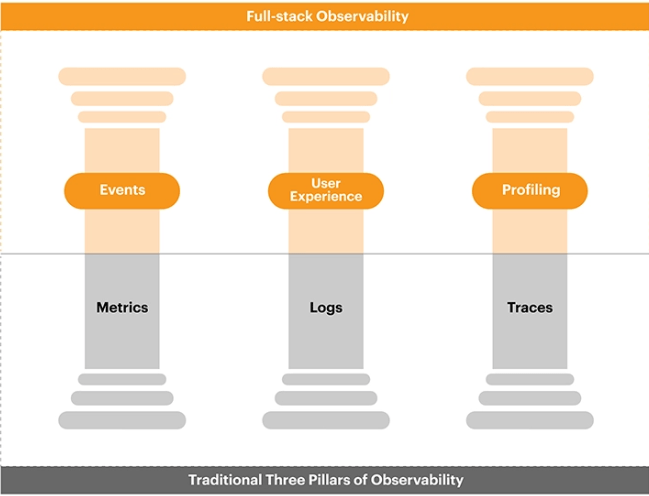
Observability refers to the ability to understand and infer the internal state of a system based on its external outputs. In simpler terms, it’s about gaining insights into how a system behaves and performs by observing its outputs, such as logs, metrics, and traces. Unlike monitoring, which focuses on collecting data passively, observability emphasizes active exploration and understanding of system behaviors. It involves collecting and analyzing diverse data sources to provide a comprehensive view of system health, performance, and behavior. Observability relies on telemetry data, which includes metrics for quantifiable measurements, logs for detailed event information, and traces for understanding transaction flows across distributed systems. By correlating and analyzing these data sources, observability enables engineers to diagnose issues, troubleshoot problems, and optimize system performance effectively.

The benefits of observability are manifold. Firstly, it enhances system reliability by providing real-time insights into system behavior and performance anomalies, allowing engineers to proactively identify and address issues before they escalate. Secondly, observability facilitates faster incident response and resolution by enabling engineers to pinpoint the root cause of problems accurately. Thirdly, it supports efficient capacity planning and resource optimization by providing visibility into resource utilization trends and performance bottlenecks. Some of the most important use cases of observability include monitoring microservices architectures, troubleshooting distributed systems, optimizing cloud infrastructure performance, and ensuring application reliability in dynamic environments.

Implementing observability involves several key steps. Firstly, organizations need to instrument their systems to collect relevant telemetry data, including logs, metrics, and traces. This often involves integrating observability tools and libraries into applications and infrastructure components. Secondly, organizations must centralize and aggregate telemetry data from across their distributed systems to gain a unified view of system behavior. This may involve deploying observability platforms or using cloud-based monitoring services. Finally, organizations need to analyze and visualize telemetry data effectively to derive actionable insights and drive informed decision-making. This may involve leveraging advanced analytics techniques, machine learning algorithms, and visualization tools to extract meaningful patterns and trends from telemetry data.

Observability is also becoming integral to DevOps practices, where it plays a crucial role in enabling continuous monitoring, feedback, and improvement throughout the software development lifecycle. In DevOps, observability tools and practices facilitate rapid detection and resolution of issues, streamline deployment pipelines, and optimize application performance. Examples of observability tools in DevOps include monitoring and logging solutions like Prometheus, Grafana, ELK Stack (Elasticsearch, Logstash, Kibana), which provide insights into application performance, infrastructure metrics, and logs, helping DevOps teams identify bottlenecks, troubleshoot issues, and improve overall system reliability and resilience.

Future trends in observability are poised to revolutionize the way organizations manage and monitor their systems, with a significant focus on automation and intelligence. Artificial Intelligence (AI) and Machine Learning (ML) will play a pivotal role in this evolution, enabling advanced analytics and predictive capabilities. AI/ML algorithms can analyze vast amounts of telemetry data to identify patterns, anomalies, and trends that might elude manual analysis. By leveraging AI-driven anomaly detection and forecasting, organizations can proactively identify and address potential issues before they impact system performance or reliability. Moreover, AI-powered incident response and remediation processes can automate the resolution of common issues, reducing the burden on human operators and minimizing downtime.

In the realm of multi-cloud and hybrid cloud environments, observability solutions will need to adapt to the complexities of managing distributed architectures across multiple cloud providers. Organizations increasingly rely on a mix of public cloud, private cloud, and on-premises infrastructure, making it challenging to gain a unified view of system health and performance. Observability tools tailored for multi-cloud environments will enable organizations to aggregate and analyze telemetry data from disparate sources, providing comprehensive insights into system behavior across the entire hybrid infrastructure. Examples of tools and services in this trend include cloud-native monitoring platforms like Datadog, New Relic, and Dynatrace, which offer support for multi-cloud environments and provide centralized visibility and analytics capabilities.

The proliferation of edge devices, driven by trends such as the Internet of Things (IoT) and edge computing, presents new challenges and opportunities for observability. Edge devices operate in diverse and often resource-constrained environments, making traditional monitoring approaches insufficient. Observability solutions for edge computing must be lightweight, scalable, and capable of processing telemetry data locally to provide real-time insights and enable proactive management. Tools like AWS IoT SiteWise, Azure IoT Hub, and Google Cloud IoT Core offer capabilities for monitoring and managing edge devices, providing visibility into device performance, health, and security metrics.

In conclusion, observability is becoming increasingly crucial in modern software engineering practices, particularly in the context of distributed, cloud-native architectures. As systems become more complex and dynamic, the ability to understand and troubleshoot system behavior in real-time becomes paramount.

Upskilling with Generative AI – Analysis and Key Takeaways

Read full artcile here

Analysis and Key Takeaways

Generative AI, driven by ML models known as foundation models (FMs), presents a transformative opportunity for businesses across various sectors. McKinsey estimates a significant potential impact on productivity, with generative AI adding trillions of dollars annually to the global economy. This technology can enhance customer operations, marketing and sales, software engineering, and R&D, revolutionizing interactions with customers, content creation, and code drafting, among other tasks.

To effectively harness the power of generative AI, businesses must cultivate an innovative culture that champions collaboration between business and technical teams. Executive support is crucial, setting goals and investing in technology and processes to enable success. Prioritizing responsible AI practices, including bias mitigation and data privacy, ensures ethical and sustainable AI implementation. By fostering a culture that embraces experimentation and learning from mistakes, organizations can drive innovation and overcome challenges.

Data is a strategic asset in generative AI, distinguishing between generic applications and those tailored to specific business needs. Organizations must leverage their data to train models that deliver personalized and differentiated experiences. A robust data strategy, including scalable storage, seamless access, and stringent security measures, is essential for success in generative AI initiatives.

Addressing real business problems is paramount in the AI journey, requiring collaboration between technical and domain experts. AI teams must define precise challenges, identify relevant data, and measure success based on business outcomes. By leveraging AWS Generative AI Innovation Center and AI Use Case Explorer, organizations can align AI initiatives with strategic objectives and drive impactful results.

Upskilling teams is critical to bridge the AI skills gap and empower employees for success in the generative AI era. On-demand skills training and specialized courses enable individuals to understand, implement, and leverage generative AI effectively. Sustainable scalability beyond pilot projects necessitates cultural shifts and technical advancements. Organizations can establish centers of excellence, integrate AI into planning processes, and leverage serverless experiences like Amazon Bedrock and SageMaker to scale AI initiatives efficiently.

Measuring the results of AI efforts requires a holistic perspective, focusing on long-term value creation rather than immediate returns. Executives must embrace agility, competitive advantage, and risk tolerance to drive successful AI initiatives. By adopting a value tree approach and measuring diverse business outcomes, organizations can evaluate the true impact of AI on their business future.

In conclusion, the journey into generative AI represents a pivotal opportunity for businesses to unlock unprecedented value and drive innovation. By cultivating an innovative culture, leveraging data strategically, addressing real business problems, and upskilling teams, organizations can navigate the complexities of AI implementation successfully. Embracing responsible AI practices and measuring outcomes holistically are essential for sustainable success. As businesses embark on this transformative journey, they must remain agile, adaptable, and focused on long-term value creation to realize the full potential of generative AI in shaping the future of industries worldwide.

The AI Journey: From Conceptualization to Deployment

Introduction

Artificial Intelligence (AI) has transformed countless industries, from healthcare to finance, by unlocking insights from data. Yet, behind the scenes, a complex process unfolds, encompassing data engineering, model selection, training, evaluation, and deployment. Understanding this journey is crucial for harnessing the true potential of AI. The journey from conceptualization to deployment is as fascinating as it is crucial. This intricate process involves a series of meticulously planned steps, each contributing to the realization of AI-driven solutions that transform industries. Let’s delve into this journey, exploring its nuances and complexities, with a specific focus on implementing predictive maintenance in manufacturing.

Defining the Problem

Every AI endeavor begins with a clear definition of the problem at hand. This involves defining objectives, identifying relevant data sources, and specifying desired outcomes. Whether it’s predicting customer churn or diagnosing diseases, a well-defined problem sets the stage for subsequent steps.

In our example, predictive maintenance in manufacturing, the challenge often revolves around minimizing equipment downtime to optimize operational efficiency and reduce costs. For instance, a critical machine in a manufacturing plant, such as a conveyor belt, may experience failures that disrupt production. Predictive maintenance aims to address this issue by leveraging AI to anticipate and prevent such failures before they occur. Let us consider the predictive maintenance needs based on factors like temperature, vibration, and usage patterns.

Data Collection & Formatting

Next comes the crucial step of data collection and formatting. Data engineers gather raw data from various sources, ensuring its quality, relevance, and accessibility. This data is then cleaned, transformed, and formatted to prepare it for analysis. This process, often involving Extract, Transform, Load (ETL) pipelines, ensures that the data is structured and standardized for further processing.The journey progresses with the meticulous collection and formatting of relevant data.

In our manufacturing scenario, this involves gathering sensor data from the conveyor belt, including temperature, vibration, and operational parameters, using IoT sensors. This raw data undergoes rigorous cleaning, normalization, and transformation using Extract, Transform, Load (ETL) pipelines to ensure its quality and reliability for subsequent analysis.

Selecting Suitable Algorithms and Models

With clean and formatted data in hand, data scientists embark on selecting suitable algorithms and models for the task at hand. This involves exploring a range of techniques, from traditional statistical methods to cutting-edge deep learning architectures. The goal is to identify models that can effectively capture patterns and relationships within the data to make accurate predictions or classifications.

Given the time-series nature of the sensor data in our example, machine learning algorithms like Recurrent Neural Networks (RNNs) or Long Short-Term Memory (LSTM) networks are ideal choices. These algorithms excel at capturing temporal dependencies and patterns in sequential data, making them well-suited for our predictive maintenance task.

Training the Models

Once the algorithms and models are chosen, the training phase begins. During this stage, the selected models are fed with the preprocessed data to learn and optimize their parameters. Through iterative adjustments based on feedback, the models gradually improve their performance, fine-tuning their ability to make predictions or classifications accurately.

Training our selected models, is a pivotal stage in our predictive maintenance, this is where our models learn to recognize patterns indicative of impending equipment failure. Historical sensor data labeled with maintenance outcomes, such as failure or normal operation, serves as the training dataset. Through iterative adjustments and optimizations, the models refine their parameters, gradually improving their predictive performance.

Evaluating Model Performance

After training, it’s essential to evaluate the performance of the models. This involves testing them on unseen data to assess their accuracy, precision, recall, and other relevant metrics. Iterative refinement based on these evaluations ensures that the models generalize well to new data and perform reliably in real-world scenarios.

Like in our eaxmple metrics such as accuracy, precision, recall, and F1-score are computed to assess the models’ predictive performance. We iterate on model architecture and hyperparameters to improve performance iteratively. It’s essential to rigorously evaluate their performance.

Optimization, Deployment, and Monitoring

Upon achieving satisfactory performance, the models undergo optimization for efficiency and scalability. They are then deployed into production environments, where they start making predictions or classifications in real-time. Continuous monitoring ensures that the models remain accurate and reliable over time, with feedback loops enabling updates and improvements as needed.

In our predictive maintenance AI system post the evaluation the models are integrated into the manufacturing system’s control infrastructure, they continuously monitor sensor data in real-time. Anomalies or patterns indicative of potential failures trigger maintenance alerts, enabling proactive intervention to prevent downtime and optimize operational efficiency.

Conclusion

From problem definition to model deployment, the journey of AI is multifaceted and intricate. Each step, from data collection to model training and deployment, requires careful planning, expertise, and collaboration across disciplines. By understanding this journey, organizations can navigate the complexities of AI development and leverage its transformative potential to drive innovation and growth.

By following the structured approach, our predictive maintenance AI system is set to revolutionize the maintenance operations, minimize downtime, and unlock new levels of efficiency and productivity in the manufacturing landscape.

Landscape of Large Language Models: Excercising AI’s Textual Power

Large Language Models (LLMs) represent a breakthrough in artificial intelligence, capable of understanding and generating human-like text at an unprecedented scale. These models, trained on vast amounts of text data, have revolutionized various applications in the tech industry, from natural language processing tasks like language translation and sentiment analysis to generating creative content such as articles and stories. The significance of LLMs stems from their ability to comprehend nuanced context, produce coherent text, and adapt seamlessly to diverse domains and languages. This adaptability makes them invaluable tools for automating language-related tasks and accelerating innovation across the tech sector. Moreover, LLMs have catalyzed advancements in conversational AI, virtual assistants, and personalized content creation, unlocking immense potential for enhancing user experiences and driving business growth. As organizations increasingly rely on data-driven insights and intelligent automation, LLMs offer a powerful means of harnessing the rich complexities of human language to achieve a wide range of objectives.

Among the popular LLMs here are few, GPT-3 (Generative Pre-trained Transformer 3) stands out for its remarkable capabilities in understanding and generating natural language. BERT (Bidirectional Encoder Representations from Transformers), known for its effectiveness in understanding context and semantic meaning in text. T5 (Text-To-Text Transfer Transformer) a verstalie LLM based on text-to-text approach and XLNet a prominent choice for NLP applications.

GPT-3 (Generative Pre-trained Transformer 3): Developed by OpenAI, GPT-3 is one of the largest and most powerful language models to date, with 175 billion parameters. It excels in generating coherent and contextually relevant text across various tasks, from language translation to code generation. GPT-3 has garnered widespread attention for its ability to produce remarkably human-like responses and has been integrated into numerous applications and services across industries.

BERT (Bidirectional Encoder Representations from Transformers): Developed by Google, BERT is renowned for its effectiveness in natural language understanding tasks. Unlike traditional language models, BERT employs a bidirectional approach, considering context from both left and right directions. This enables BERT to capture subtle nuances and dependencies in language, leading to more accurate results in tasks such as sentiment analysis, question answering, and text classification.

T5 (Text-To-Text Transfer Transformer): Developed by Google, T5 is a versatile language model designed to perform a wide range of natural language processing tasks in a unified framework. T5 operates on a “text-to-text” approach, where input and output are represented as text strings, enabling seamless adaptation to various tasks through fine-tuning. T5 has demonstrated strong performance across multiple benchmarks, showcasing its effectiveness in tasks such as summarization, translation, and text generation.

XLNet: Developed by researchers at Google and Carnegie Mellon University, XLNet incorporates a novel permutation-based training objective to capture bidirectional context while avoiding the limitations of traditional autoregressive and autoencoding models. This allows XLNet to achieve state-of-the-art results across a range of natural language processing tasks, including language understanding, generation, and translation. With its innovative training approach and robust performance.

As organizations integrate Large Language Models (LLMs) into their workflows, they must navigate potential challenges and pitfalls. One significant concern is the risk of biased or unethical outputs generated by LLMs, as these models may inadvertently perpetuate biases present in the training data. Addressing bias in LLMs requires proactive measures, including data preprocessing techniques, bias detection algorithms, and ongoing monitoring to ensure fair and unbiased outcomes. Furthermore, safeguarding the security and privacy of sensitive data used to fine-tune or interact with LLMs is paramount to prevent breaches or unauthorized access. Implementing robust data protection measures, encryption protocols, and access controls can mitigate these risks and uphold data integrity.

In selecting or evaluating LLMs for adoption, organizations must consider various factors beyond performance metrics alone. Scalability, ease of integration with existing systems, and support for diverse languages and domains are essential considerations. Moreover, ethical considerations such as bias detection and mitigation strategies should be integral to the evaluation process. Collaborating with experts in AI ethics and diversity, equity, and inclusion (DEI) can provide valuable insights and guidance in navigating these ethical complexities. Additionally, conducting rigorous testing and validation processes, including real-world simulations and user feedback, can help organizations assess the suitability and reliability of LLMs for their specific use cases. By adopting a holistic approach that prioritizes ethical considerations, security protocols, and performance metrics, organizations can leverage LLMs responsibly while minimizing potential risks and maximizing their transformative potential.

“AI will probably most likely lead to the end of the world, but in the meantime, there’ll be great companies.” – Sam Altman

My Next Gadget – Apple’s Vision Pro: A Glimpse into the Future of Wearable Innovation

Apple has once again taken a giant leap in the world of technology with its latest innovation, the Vision Pro. This cutting-edge gadget marks Apple’s foray into the world of smart eyewear, blending style, functionality, and innovation seamlessly.

Design and Form Factor: The Vision Pro is a sleek and stylish pair of smart glasses that seamlessly integrates into your daily life. With a minimalist design, lightweight frame, and premium materials, Apple has achieved a perfect balance between aesthetics and comfort. The glasses house a discreet display that augments your reality without compromising on the overall design.

Advanced AR Capabilities: At the core of Vision Pro lies its advanced Augmented Reality (AR) capabilities. Whether you’re navigating city streets, exploring landmarks, or receiving real-time information, the AR features elevate your surroundings. Apple has incorporated state-of-the-art sensors and optics, ensuring a seamless AR experience that blends seamlessly with the physical world.

Immersive Audio Experience: Vision Pro doesn’t just focus on visuals; it redefines the audio experience too. With integrated spatial audio technology, the glasses provide an immersive sound experience tailored to your movements and surroundings. This innovation enhances not just what you see but also what you hear, delivering a truly immersive sensory encounter.

Health and Wellness Integration: True to Apple’s commitment to health and wellness, Vision Pro comes equipped with a range of health-centric features. From monitoring daily activity to providing insights into your overall well-being, these smart glasses seamlessly integrate into the Apple ecosystem, syncing with your iPhone and other Apple devices.

Explore more about Apple’s Vision Pro on Apple’s official page and step into a new era of innovation and connectivity.

Vision Pro Teardown

For the tech enthusiasts who crave a glimpse into the inner workings of the Vision Pro, the recent teardown by iFixit provides an in-depth exploration. The teardown offers a fascinating look at the intricate components that power Apple’s latest innovation. Watch the teardown video to uncover the engineering marvel beneath the sleek exterior.

The Future of Wearable Innovation: Apple’s Vision Pro is not just a gadget; it’s a testament to the future of wearable technology. With its seamless integration of AR, immersive audio, and health features, the Vision Pro sets a new standard for smart eyewear. As technology continues to advance, Apple remains at the forefront, pushing boundaries and reshaping how we interact with the digital world.

Edge Computing: Transforming Real-Time Data Processing Across Industries

In my previous blog post we talked about the differences in cloud computing and edge computing with respect to data analytics. In this post lets understand the data processing revolutionized via edge computing, what is it? and why is it important?

Edge Computing emerges in the new era as a pivotal player, redefining the paradigm of real-time data processing that can revolutionize the way data is collected, processed and significantly impacting usage across diverse industries. Let’s delve into the depths of Edge Computing to uncover its mechanisms, benefits, applications, and future trends.

1. What is Edge Computing?

Edge computing, a revolutionary distributed computing model, redefines the landscape of data processing by bringing it closer to the source of data generation. Unlike the conventional approach of transmitting data to centralized cloud data centers for processing, edge computing decentralizes the process, positioning it at the “edge” of the network, in close proximity to the devices and sensors collecting data.

At its core, edge computing relies on miniature data centers, often referred to as “edge nodes” or “edge servers,” strategically placed near data sources. These nodes conduct real-time data analysis and processing, leveraging their proximity to data origins to significantly reduce latency and bandwidth usage. This strategic placement not only enables faster response times but also enhances overall system performance.

The decentralized nature of edge computing is a key distinction from traditional cloud computing, as it disperses computational power near the data source, optimizing efficiency. In response to the exponential growth in internet-connected devices, edge computing mitigates the challenges associated with transferring massive data volumes across networks. The conventional method of uploading extensive analytical data to centralized locations can lead to network congestion, impacting critical business tasks like video conferencing in today’s remote work scenarios. Latency, a critical factor for real-time applications, is efficiently managed by deploying storage and servers at the edge, eliminating the need for data to traverse extensive distances.

Edge technology has evolved significantly to address the surge in data generated by IoT devices and the growing demand for real-time applications. By processing data at the extremities of the network, edge computing ensures that only optimized data is transmitted, reducing data transfer times and lowering bandwidth costs. As we witness the continued evolution of technology, edge computing emerges as a transformative force, revolutionizing real-time data processing and offering unparalleled efficiency in the modern digital landscape.

2. How does Edge Computing work?

Edge Computing intricately relies on a distributed architecture that involves deploying micro-data centers or edge servers in close proximity to the data source. This strategic placement brings about real-time data processing capabilities, transforming the dynamics of information handling in the digital era.

Edge Gateways: At the forefront of this transformative technology are Edge Gateways. These gateways serve as the entry points to the edge network, facilitating the seamless flow of data between the local devices and the edge servers. They play a pivotal role in managing the communication and data transfer processes, ensuring that relevant information is efficiently transmitted for processing. Edge Gateways act as the guardians of real-time data, filtering and directing it to the edge servers when necessary.

Edge Storage: Integral to the edge computing infrastructure is Edge Storage, a localized repository for data. Unlike traditional centralized cloud storage, Edge Storage is strategically positioned to house data closer to the point of generation. This proximity not only minimizes latency but also allows for quick access and retrieval of information. Edge Storage acts as a reservoir for the relevant data snippets, ensuring that only essential information is transmitted to the central cloud, optimizing bandwidth usage.

Edge Servers: The backbone of Edge Computing lies in the deployment of Edge Servers. These micro-data centers are strategically scattered to ensure that computational power is readily available near the data source. Edge Servers process data locally, unleashing the potential for real-time analytics and insights. This localized processing minimizes the need for extensive data transmission, contributing to reduced latency and enhanced overall system efficiency. Edge Servers operate in tandem with Edge Gateways and Edge Storage, forming a cohesive ecosystem that revolutionizes data processing dynamics.

In essence, Edge Computing orchestrates a symphony of Edge Gateways, Edge Storage, and Edge Servers to bring about a transformative approach to real-time data processing. This distributed architecture not only minimizes latency but also optimizes bandwidth usage, paving the way for a new era in information handling and digital efficiency.

3. Benefits of Edge Computing

Lower Latency: Edge Computing emerges as a game-changer in the quest for lower latency. By processing data in close proximity to its source, Edge Computing ensures lightning-fast response times. This benefit translates into a profound impact on applications where real-time interactions are paramount. Industries such as gaming, virtual reality, and autonomous vehicles witness a transformative shift, as the latency is reduced to a fraction, enhancing user experiences and operational efficiency.

Improved Resiliency: The distributed architecture of Edge Computing contributes to unparalleled system resiliency. Unlike traditional centralized models, where a failure in one part can disrupt the entire system, Edge Computing decentralizes the processing. This enhances reliability and resilience, particularly in critical sectors like healthcare and finance. In scenarios where downtime is not an option, Edge Computing becomes the backbone of uninterrupted operations.

Enhanced Efficiency: Localized data processing, a hallmark of Edge Computing, brings forth a new era of efficiency. The reduction in massive data transfers minimizes the strain on networks, optimizing overall utilization. Industries relying on resource-intensive applications, such as video streaming and content delivery, witness a surge in operational efficiency. Edge Computing emerges as a catalyst for seamless and resource-effective data handling.

Flexibility & Mobility: Edge Computing shines in its support for mobile and IoT devices, ushering in a realm of flexibility and mobility. Industries that leverage mobile applications and IoT ecosystems, such as logistics and smart cities, experience a paradigm shift. The ability to process data on the edge enhances adaptability, allowing for dynamic and on-the-go data processing. This flexibility becomes a cornerstone for industries navigating the complexities of a mobile-centric landscape.

Reduced Data Transportation Cost: A noteworthy economic advantage of Edge Computing lies in the significant reduction of data transportation costs. Processing data locally minimizes the need for extensive data transfers, translating into substantial savings. Sectors dealing with voluminous data, such as e-commerce and manufacturing, witness a streamlined cost structure. Edge Computing becomes a strategic ally in cost-effective data management.

Real-time Data Processing: In the realm of applications requiring instant decision-making, Edge Computing takes center stage with its facilitation of real-time data processing. Industries like finance, where split-second decisions are pivotal, benefit immensely. Edge Computing ensures that critical data is processed in real-time, eliminating delays and providing a competitive edge in sectors where timing is everything.

4. Types of Edge Computing

Fog Computing: Fog Computing stands as a transformative extension of cloud computing capabilities to the edge of the network. This type of edge computing leverages the power of localized processing, allowing data to be analyzed and acted upon closer to its source. Organizations embracing Fog Computing witness a paradigm shift in efficiency and responsiveness. A noteworthy example is Cisco’s IOx (IoT in a Box) platform, which brings Fog Computing to the forefront. By processing data near IoT devices, it enhances real-time decision-making in various industries, from smart cities to manufacturing.

Mobile Edge Computing (MEC): With a focus on processing tasks on mobile base stations or cellular towers, Mobile Edge Computing (MEC) emerges as a pivotal player in the era of mobile-centric computing. This type of edge computing optimizes the processing of data generated by mobile devices, ensuring swift and localized analysis. An exemplary organization harnessing MEC is AT&T. Through its MEC solutions, AT&T enhances the efficiency of mobile networks, providing faster and more responsive services to users.

Cloudlet: A beacon of localized processing, Cloudlet represents a small-scale cloud data center that extends cloud computing capabilities to the edge. This type of edge computing empowers organizations to establish miniaturized data centers closer to the data source. An illustrative example is Carnegie Mellon University’s Open Cirrus Cloudlet. By deploying cloudlets, the university facilitates edge computing for mobile applications, fostering seamless and efficient data processing.

5. Key Architectural Considerations, Challenges & Opportunities

Security Concerns: One of the paramount considerations in edge computing revolves around ensuring robust data security at the edge. Organizations must safeguard sensitive information as it traverses through distributed architectures. A shining example is Microsoft Azure IoT Edge, which prioritizes security through features like Azure Sphere. With secure-by-design principles, Azure IoT Edge mitigates security risks by implementing hardware-rooted identity and comprehensive threat protection.

Scalability: The challenge of adapting edge infrastructure to varying workloads underscores the importance of scalability. Organizations grapple with the dynamic nature of data processing demands. Amazon Web Services (AWS) addresses this challenge adeptly through AWS IoT Greengrass. By providing a scalable edge computing solution, AWS IoT Greengrass enables seamless adaptation to fluctuating workloads, ensuring optimal performance and resource utilization.

Interoperability: Seamless integration with existing systems is a crucial aspect of edge computing architecture. Achieving interoperability ensures cohesive operations across diverse components. IBM Edge Application Manager exemplifies this by offering a unified platform for managing edge applications. With support for open standards, IBM Edge Application Manager fosters interoperability, allowing organizations to integrate edge computing seamlessly into their existing ecosystems.

Data Governance: Establishing guidelines for data processing and storage forms the bedrock of effective data governance in edge computing. Google Cloud IoT Edge, with its robust data governance capabilities, exemplifies best practices. Through features like Cloud IoT Edge AI, Google Cloud provides organizations with tools to define and enforce data governance policies, ensuring responsible and compliant edge computing practices.

As organizations navigate the edge, addressing these architectural considerations becomes pivotal. By fortifying security, ensuring scalability, fostering interoperability, and implementing robust data governance, organizations pave the way for a resilient and efficient edge computing landscape.

6. Edge Computing in Various Industries

  • Agriculture: Precision farming using IoT devices for real-time monitoring.
  • Healthcare: Remote patient monitoring and medical data analysis.
  • Retail/E-commerce: Personalized shopping experiences and inventory management.
  • Automobile/Transportation: Autonomous vehicles and traffic management.
  • Manufacturing: Predictive maintenance and quality control.
  • Smart Cities: Integrated solutions for energy management, traffic control, and public services.

7. Future Trends

AI Integration: The future of edge computing is intricately linked with the integration of artificial intelligence (AI) algorithms. Organizations are actively exploring ways to enhance decision-making at the edge by infusing AI capabilities. NVIDIA EGX, with its AI-powered edge computing platform, exemplifies this trend. Leveraging technologies like NVIDIA TensorRT, organizations can deploy AI models directly at the edge, enabling intelligent and autonomous decision-making.

5G Integration: As the global rollout of 5G networks accelerates, the integration of edge computing with 5G stands out as a pivotal future trend. The collaboration between edge computing and 5G networks promises faster and more reliable communication. Ericsson Edge Gravity, a 5G-enabled edge computing platform, exemplifies this trend. By harnessing the power of 5G, organizations can achieve ultra-low latency and high-speed data processing at the edge, revolutionizing industries that rely on real-time insights.

Blockchain Integration: Ensuring secure and transparent transactions at the edge is an emerging trend driven by the integration of blockchain technology. IBM Blockchain Transparent Supply, an edge-to-cloud blockchain solution, showcases how organizations can enhance data integrity and security at the edge. By leveraging blockchain, organizations can instill trust in edge computing transactions, particularly in industries like finance, healthcare, and supply chain.

Conclusion

Edge Computing emerges not just as a technological evolution but as a transformative force shaping the future of real-time data processing. The amalgamation of AI, 5G, and blockchain heralds a new era where edge computing becomes not just a solution but a catalyst for innovation. As organizations navigate this dynamic landscape, embracing these future trends, they are poised to unlock unprecedented possibilities. The journey ahead involves not just overcoming challenges but seizing the opportunities that edge computing presents. In conclusion, the era of edge computing is not just on the horizon; it’s unfolding, offering a paradigm shift that redefines how industries leverage data for unparalleled insights and efficiency.

AI pair programming: a threat to programmers or is it a buddy?

The title “AI pair programming: a threat to programmers or is it a buddy?” explores the concept of AI-driven pair programming and raises the question of whether it poses a potential threat to human programmers or if it serves as a helpful companion in the coding process. AI pair programming refers to the collaboration between a human programmer and an artificial intelligence system, where the AI assists in generating code snippets, suggesting improvements, and enhancing overall coding productivity.

GitHub Copilot is a prominent example of AI pair programming technology. It is an extension for Visual Studio Code (VS Code) developed by GitHub in collaboration with OpenAI. GitHub Copilot uses machine learning models to provide real-time code suggestions as developers write, making the coding process more efficient.

Visual Studio Code (VS Code) is a lightweight, open-source code editor developed by Microsoft. It supports various programming languages and offers features like syntax highlighting, debugging support, and extensions to enhance functionality.

Here are brief descriptions of the alternatives to GitHub Copilot for AI pair programming in VS Code:

Tabby: Tabby is an AI-based code completion tool that integrates with VS Code, helping developers by providing context-aware code suggestions.

Tabnine: Tabnine utilizes machine learning to predict code and offer context-aware code completion suggestions in real-time, enhancing developer productivity.

FauxPilot: FauxPilot is an AI extension for VS Code, offering code completion suggestions and assisting developers in writing code more efficiently.

CodeGeeX: CodeGeeX is an AI-powered coding assistant for Visual Studio Code, offering intelligent code completion and suggestions for improved development speed.

Codeium: Codeium is an AI-driven code completion tool for VS Code that provides suggestions based on the context of the code being written.

Cody: Cody employs machine learning algorithms to predict and suggest code snippets, streamlining the coding process for developers in VS Code.

Blackbox AI: Blackbox AI is an AI pair programming tool for VS Code, providing code suggestions and enhancing the coding experience with context-aware assistance.

Bito: Bito is an AI-powered code completion tool for Visual Studio Code, assisting developers by suggesting relevant code snippets and improving coding speed.

Amazon CodeWhisperer: CodeWhisperer is an AI-powered coding assistant from Amazon that helps developers by suggesting code snippets and offering intelligent code completion.

AskCodi: AskCodi is an AI-driven coding companion that integrates with VS Code, assisting developers with code completion and intelligent suggestions.

A detailed comparison is available here . These alternatives aim to enhance the coding experience by leveraging AI technologies to offer intelligent code suggestions and improve overall developer efficiency.

In conclusion, the landscape of AI pair programming, exemplified by tools like GitHub Copilot and its alternatives such as Bito, Tabnine, and others, presents a nuanced relationship between artificial intelligence and human programmers. The overarching question of whether AI is a looming threat set to replace human programmers or a valuable assistant poised to enhance productivity and efficiency hinges on how these technologies are leveraged.

AI pair programming, at its core, is designed to assist developers by offering real-time code suggestions, automating repetitive tasks, and boosting coding speed. Rather than replacing human programmers, these AI tools aim to be collaborative partners, streamlining the coding process and providing valuable insights.

While AI pair programming undoubtedly accelerates certain aspects of software development, it is essential to recognize the unique capabilities that human programmers bring to the table, such as creativity, critical thinking, and problem-solving. AI is a powerful assistant that augments human capabilities, helping developers focus on higher-level tasks, fostering innovation, and increasing overall efficiency.

In essence, the future of AI pair programming lies in a harmonious collaboration between human programmers and intelligent algorithms. By embracing these tools as allies rather than threats, developers can harness the potential of AI to elevate their coding experiences, create innovative solutions, and navigate the ever-evolving landscape of technology with confidence and agility.